




Executive Summary
Disposable vapes have revolutionized the consumer electronics market within Australia, offering unparalleled convenience and a diverse range of options. However, their single-use nature presents significant environmental and regulatory challenges. This comprehensive guide, optimized by VPGAU, delves into the material science of these devices, the specific compliance landscape in Australia, and actionable strategies for responsible usage and disposal. By understanding the lifecycle of a disposable vape, consumers can make informed decisions that align with safety standards and environmental sustainability.
The rapid ascendancy of disposable vapes in the Australian market is undeniable. These devices offer a streamlined user experience, eliminating the need for coil replacements or external charging in many models. However, this convenience comes with a hidden cost: the complexity of end-of-life management. As the largest online platform for disposable vapes in Australia, VPGAU is committed not only to supplying top-tier products but also to educating our customer base on the technical realities and environmental responsibilities associated with vaping technology.
The Engineering and Material Composition of Disposable Vapes
To understand the environmental footprint, one must first understand the engineering. A standard disposable vape is not merely a piece of plastic; it is a complex micro-electronic device. Contrary to generic descriptions, these devices are integrated systems comprising High-Density Polyethylene (HDPE) or Polycarbonate (PC) casings, lithium-ion power cells, and sophisticated micro-controllers.
1. The Power Unit (Battery)
Most disposable vapes utilize a Lithium-ion (Li-ion) or Lithium-polymer (LiPo) battery.
Specs: Typically 3.7V nominal voltage.
Capacity: Ranges from 280mAh to 1600mAh depending on the device’s puff count.
Chemistry: Often uses Lithium Cobalt Oxide (LiCoO2) cathodes.
Risk: Contains critical minerals (Cobalt, Lithium) and can suffer thermal runaway if punctured or crushed.
2. The Chassis (Casing)
The external shell ensures durability and protects the internal capacity reservoir.
Material: Industrial-grade Polycarbonate (PC) or ABS plastic.
Durability: Engineered to withstand impact, meaning it does not biodegrade.
Decomposition: Can take 450+ years to decompose in landfill conditions, fragmenting into microplastics.
3. Circuitry and Heating Element
The logic board controls the firing mechanism.
Components: Printed Circuit Board (PCB) containing copper, gold, and trace amounts of lead (in older solders).
Heating Element: Usually Kanthal or Nichrome wire/mesh.
Wicking: Silica or organic cotton saturated with the device’s capacity.
The Scale of the E-Waste Challenge
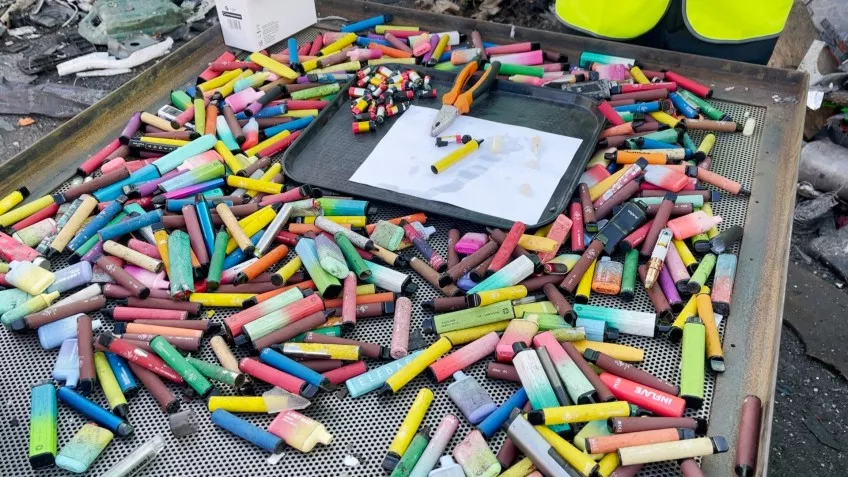
The term “e-waste” often conjures images of discarded refrigerators or laptops, but disposable vapes represent a rapidly growing category of WEEE (Waste Electrical and Electronic Equipment). According to global materials flow analysis, the sheer volume of units sold contributes significantly to the accumulation of hazardous waste if not managed via circular economy principles.
Quantitative Analysis of Waste Streams
When we analyze the Australian market, the data indicates a rising trend in the consumption of electronic vaping devices. A single disposable vape might seem insignificant, weighing approximately 15 to 30 grams. However, when aggregated:
- Copper Loss: For every 1 million devices discarded, we lose roughly 1,000 kg of copper, a vital conductor used in renewable energy infrastructure.
- Lithium Drain: The lithium contained in 10 million disposables is enough to power hundreds of electric vehicle batteries. Discarding this prevents the recovery of this critical strategic metal.
- Plastic Accumulation: The casings contribute to the polymer load in landfills, releasing additives as they weather over centuries.
Environmental Risks: Why Compliance Matters
The improper disposal of disposable vapes is not just a litter issue; it is a chemical safety hazard. VPGAU strictly adheres to Australian standards regarding product safety, but the consumer’s role in the end-of-life phase is critical. When a vape is thrown into a general waste bin, it undergoes mechanical crushing in garbage trucks.
The Phenomenon of Thermal Runaway
Batteries inside disposable vapes store high energy density. If the separator within the battery cell is breached due to crushing in a garbage truck, the cathode and anode touch, causing a short circuit. This generates intense heat (exothermic reaction), leading to fire. Waste management facilities in Australia report frequent fires attributed to concealed lithium batteries in general waste streams.
Leaching and Soil Contamination
Beyond fire risks, the internal capacity reservoir may contain chemical compounds that, while safe for inhalation usage standards, are pollutants when introduced to groundwater. The heavy metals in the circuit board (like lead solder in non-RoHS compliant devices) and battery electrolytes can leach into the soil, disrupting local ecosystems. This highlights the importance of purchasing from reputable suppliers like VPGAU, where product sourcing emphasizes quality manufacturing standards.
Regulatory Landscape and Recycling Solutions
Governments and industry bodies globally are tightening regulations on batteries and single-use electronics. In Australia, the stewardship of batteries is a major focus. While specific “vape recycling” programs are still maturing compared to general battery recycling, the regulatory framework is clear: batteries must not go to landfill.
At VPGAU, we advocate for strict adherence to local disposal laws. We encourage our customers to utilize specialized e-waste collection services.
How to Dispose of Vapes Correctly in Australia
- 1
Do Not Disassemble (Unless Safe): Most disposable vapes are sealed units. Forcing them open can puncture the battery. If the device is designed to be sealed, treat the whole unit as e-waste.
- 2
Identify Hazardous Waste Drop-off Points: Council-run Community Recycling Centres (CRCs) in Australia often accept embedded battery products.
- 3
Utilize Retailer Take-Back Schemes: Check with local specialist retailers if they have a dedicated bin for vape hardware recycling.
- 4
Tape the Ends: If possible, placing tape over the airflow holes can prevent residual leakage during transport to the recycling facility.
Comparative Analysis: Disposable vs. Reusable Systems
From an operational and economic perspective, the choice between disposable vapes and reusable pod systems is driven by user preference for convenience versus long-term cost efficiency. VPGAU stocks a massive variety of disposable vapes because they offer the lowest barrier to entry and the highest convenience factor for the end user.
However, for the empirically minded consumer, comparing the technical specifications and lifecycle costs is valuable. Below is a detailed breakdown using industry-standard metrics.
| Feature Matrix | Disposable Vapes | Reusable Pod Systems |
|---|---|---|
| Maintenance Profile | Zero maintenance. Pre-charged, pre-filled capacity. | Requires coil changes, capacity refilling, and battery charging. |
| Option Consistency | High. Factory-sealed to preserve the specific option profile. | Variable. Depends on coil health and user wattage settings. |
| Waste Generation | High volume (Whole device discarded). | Lower volume (Only coils/pods discarded). |
| Initial Cost | Low ($20 – $35 AUD approx). | Higher ($40 – $80 AUD for device + accessories). |
| Suitability | Travel, nights out, trial users, extreme convenience. | Long-term daily use at home/office. |
Economic Impact Analysis (Cost Over Time)
Financial prudence is a key aspect of consumer decision-making. While disposable vapes have a higher recurring cost if used heavily, they eliminate the sunk cost of expensive hardware that might break or be lost. For the casual user, the disposable model is often more economical. For the heavy user, wholesale purchasing is the best way to mitigate costs.
The following table illustrates the cost trajectory based on average Australian market pricing (data estimates based on VPGAU internal sales metrics).
| Time Horizon | Casual User (Disposable) | Heavy User (Disposable – Retail) | Heavy User (Disposable – VPGAU Wholesale) |
|---|---|---|---|
| 1 Month | $40 – $60 | $200+ | $140 – $160 |
| 6 Months | $240 – $360 | $1,200+ | $840 – $960 |
| 1 Year | $480 – $720 | $2,400+ | $1,680 – $1,920 |

VPGAU: Driving Standards in the Australian Market
Navigating the market for disposable vapes can be difficult due to the influx of counterfeit products. Counterfeit devices not only provide a subpar experience but often bypass safety regulations, containing non-compliant batteries or materials. VPGAU stands as a bulwark against this.
We are the largest online platform for disposable vapes in Australia because we prioritize:
- Supply Chain Transparency: We source directly from manufacturers or authorized master distributors.
- Freshness of Stock: Batteries degrade over time even when not used. Our high turnover ensures you receive devices with optimal charge retention.
- Regulatory Awareness: We constantly monitor Australian import and retail laws to ensure our inventory is compliant.
Ready to Upgrade Your Experience?
Don’t settle for questionable quality. Shop with Australia’s most trusted supplier.
Whether you need a single device or are looking for wholesale disposable vapes for your business, we have you covered.
We bring you the best selection of top-tier vapes delivered straight to your door anywhere in Australia.
Common Questions (FAQs)
Q: Can disposable vapes be recycled in my yellow recycling bin?
A: Absolutely not. Placing them in household recycling bins poses a fire risk to recycling trucks and facilities due to the lithium battery. They must be taken to specialized e-waste drop-off points.
Q: How do I know if the disposable vapes I buy are authentic?
A: Authentic products usually come with a scratch-off verification code that can be checked on the manufacturer’s website. Purchasing from established platforms like VPGAU guarantees authenticity as we strictly partner with reputable manufacturers.
Q: Why does my disposable vape blink when I try to use it?
A: A blinking light typically indicates that the battery has been depleted or the capacity is empty. If it occurs on a brand new device, it may be a manufacturing defect. VPGAU offers support for such instances with our quality guarantee.
Q: Are there different “options” available for these devices?
A: Yes, one of the main appeals of disposable vapes is the vast array of options. From fruit profiles to cooling sensations, the variety allows users to find the exact experience they prefer. VPGAU stocks the widest range of these options in Australia.
Q: What is the average lifespan of a disposable vape?
A: This depends on the “puff count” rating and the battery size (mAh). A 600-puff device typically lasts a moderate user 1-2 days, whereas 3000+ puff devices can last over a week. However, this varies heavily based on the length of each draw.
Final Thoughts on Sustainability and Choice
The conversation around disposable vapes is often polarized, but the reality is one of balance. These devices offer a vital alternative for adult consumers seeking convenience and specific options. However, with consumption comes responsibility. By choosing high-quality devices from trusted sources like VPGAU and committing to proper e-waste disposal methods, Australian vapers can enjoy the technology while minimizing their environmental footprint.
About Us: VPGAU
At VPGAU, we are more than just an online store; we are your dedicated partners in the vaping journey. Rooted in the Australian market, our mission is simple: to provide Aussie vapers with a reliable, safe, and seamless platform to access the world’s best vaping products. From those making the switch to seasoned enthusiasts, we are here to support every step of your experience.
Authenticity Guaranteed
In a market where consistency matters, we refuse to cut corners. We understand that safety and performance are non-negotiable. That’s why VPGAU strictly partners with reputable manufacturers to offer a curated selection of genuine electronic cigarettes, popular disposable vapes (including IGET and other top-tier brands), and essential accessories. Every product on our shelf is verified for authenticity to ensure robust build quality and the exceptional option profile you deserve.
Premium Value, Honest Pricing
We believe that high-quality vaping shouldn’t come with a premium price tag. VPGAU is committed to “Affordability Without Compromise.” By optimizing our supply chain, we bring you competitive pricing on top-rated devices. We ensure you get the best value for your money, balancing cost-effectiveness with the highest safety standards.
Fast, Local Service
We know that when you order, you want it fast. With a customer-first approach tailored for Australia, we prioritize rapid dispatch and reliable shipping across the country. Our support team is always ready to assist, ensuring that your experience—from browsing to unboxing—is smooth and hassle-free.
VPGAU — Quality Vapes, Delivered Down Under.
About the Author
John Colin
Operations & Compliance Specialist
John Colin is a dedicated expert in Australian operations with deep expertise in supply chain management and regional compliance. He provides actionable strategic guidance to retailers across Oceania, helping them optimize inventory and navigate the complexities of local import laws. Committed to transparency and professionalism, John ensures that all market analysis and operational advice are based on verified data and the latest compliance guidelines.